
A certificate of analysis can help you compare what a CBD product claims with what a laboratory measured. Learn how to match the batch, read cannabinoid units, check contaminant panels and recognize warning signs before ordering.
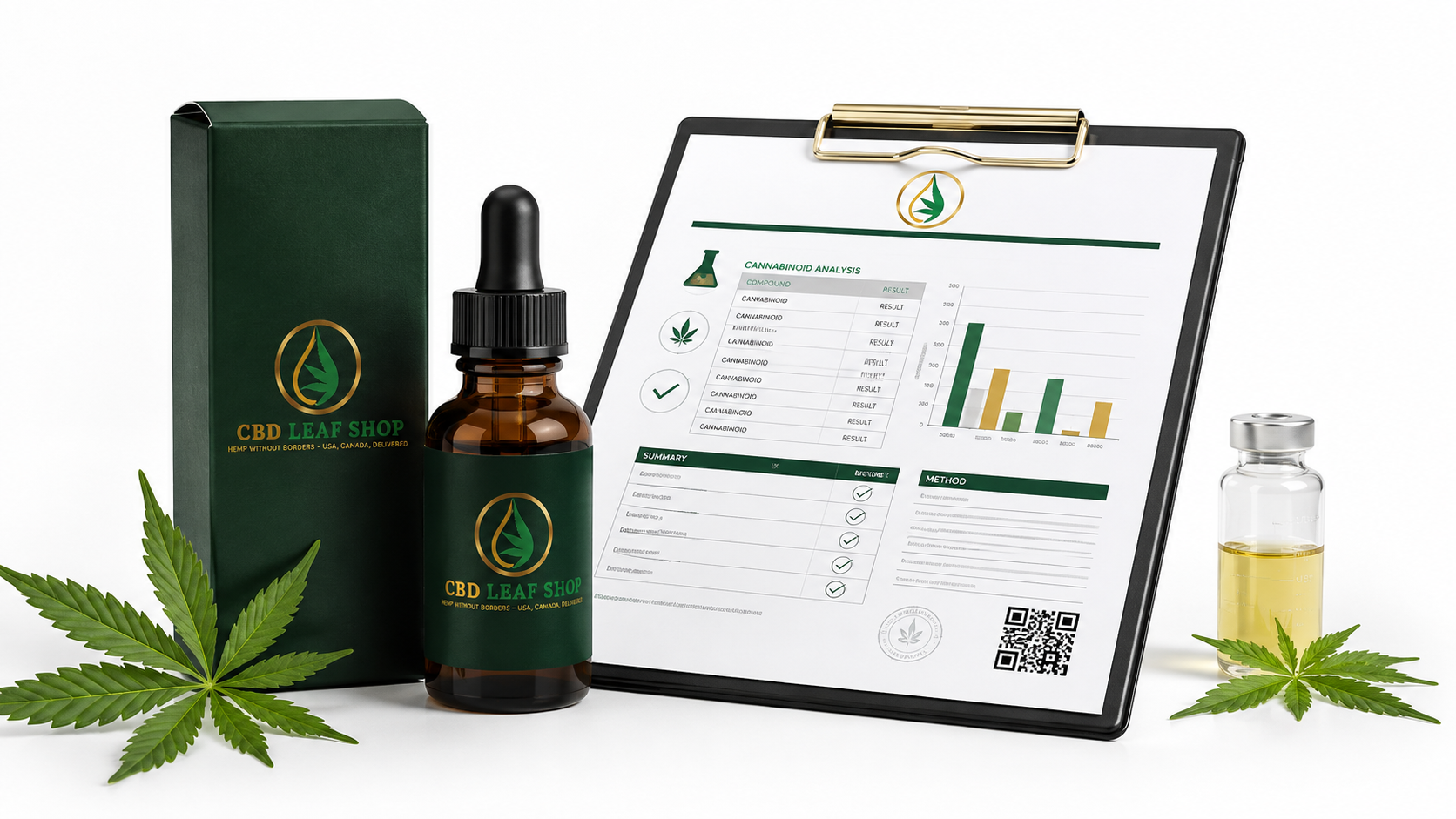
A useful COA identifies the tested sample, laboratory, batch, methods and results—not merely a brand name.
CBD labels can tell you the advertised strength, ingredients and serving information, but the label is still a claim made by the seller or manufacturer. A certificate of analysis—usually shortened to COA—records what a laboratory found in a submitted sample. It can help you check cannabinoid content and, when those panels were ordered, results for selected contaminants.
A COA is useful evidence, but it is not a guarantee that a product is suitable for every person. It also cannot replace medical advice, local laws or careful use. If you are new to the subject, begin with our complete beginner’s guide to CBD products, then use this page whenever you compare a bottle, softgel, edible, vape or CBD hemp flower.
What Is a CBD Certificate of Analysis?
A COA is a report produced after a laboratory analyzes a sample. Depending on the requested tests, the report may show cannabinoids, terpenes, pesticides, heavy metals, residual solvents, microbes, mycotoxins or other measurements. Not every product requires the same panel: residual-solvent testing is especially relevant to extracts made with solvents, while microbial and moisture concerns can be important for plant material.
The report should make clear who performed the test, what sample was received, when it was tested and how the result is expressed. A QR code on a package is convenient only if it opens the correct report. A polished logo or a large “PASS” badge is not enough by itself.
The 60-Second Authenticity Check
- Open the original report. Use the product-page link or scan the package QR code. A complete PDF or laboratory-hosted page is more useful than a cropped screenshot.
- Identify the laboratory. Look for its name, contact information, report number and any stated accreditation. Accreditation can support laboratory competence, but it does not make every result automatically perfect.
- Match the product. Compare the product name, form and description. Oil, flower, gummies and vape products should not share an unrelated sample report.
- Match the lot or batch. Compare the code on the package with the COA. Small formatting differences may occur, but the identifiers should clearly correspond.
- Check dates and status. Find the sample received date, test date and report date. Also check whether the report is final, amended or still preliminary.
- Look for the full scope. Confirm which panels were actually tested rather than assuming a potency “pass” also covers pesticides, metals or microbes.
If a listing has no report, the batch cannot be matched, or the link opens an unreadable image, ask the seller for clarification. The CBD Leaf Shop Lab Tests and COAs page is the starting point for available product reports.
How to Read the Cannabinoid Potency Panel
The potency section lists cannabinoids the laboratory looked for and the quantity detected. Common entries include CBD, CBDA, delta-9 THC, THCA, CBG, CBGA, CBC and CBN. “Total CBD” and “total THC” may also appear because acidic cannabinoids can convert to their neutral forms under heat.
CBD and CBDA
CBD is the neutral form, while CBDA is its acidic precursor. Flower often contains substantial CBDA; processed oil may contain more CBD.
THC and THCA
Delta-9 THC and THCA should be read together when total THC matters. A low delta-9 result alone does not describe potential total THC.
Minor cannabinoids
CBG, CBC, CBN and others may be reported when detected. Their presence does not prove a medical effect.
Under USDA hemp production testing, total THC accounts for delta-9 THC and the potential conversion of THCA and is reported on a dry-weight basis. Many reports calculate it approximately as delta-9 THC + (THCA × 0.877). If the laboratory already provides “Total THC,” use its stated result and method rather than adding values twice.
Total CBD may be calculated in a similar way from CBD and CBDA, but the exact fields and rounding differ among laboratories. Read the notes or calculation key printed on that report. The reported profile should also make sense for the product type discussed in our full-spectrum vs. broad-spectrum CBD oil guide.
Percent, mg/g, mg/mL and Other COA Terms
A number is meaningful only with its unit. Flower results are commonly expressed as a percentage by weight or milligrams per gram. Liquids may use mg/g, mg/mL, a percentage or the total amount calculated for the container. Gummies and softgels may be reported per unit or for a combined laboratory sample.
| Term or unit | What it generally means | What to check |
|---|---|---|
| % by weight | Parts per hundred by mass. One percent equals approximately 10 mg per gram. | Confirm whether the result is dry weight or as received. |
| mg/g | Milligrams of the analyte per gram of sample. | Do not treat mg/g as the total milligrams in the entire package. |
| mg/mL | Milligrams per milliliter of liquid. | Container total requires the tested concentration and actual volume. |
| ND | Not detected above the method’s detection threshold. | ND does not necessarily mean absolute zero. |
| <LOQ | Detected or estimated below the limit of quantitation, depending on the lab’s notation. | The amount is too low for reliable numerical reporting under that method. |
| LOD / LOQ | Limit of detection / limit of quantitation. | Lower limits mean the method can identify or quantify smaller amounts. |
| NT | Not tested. | This is different from “pass” and different from “not detected.” |
| MU or ± value | Measurement uncertainty around a reported value. | Laboratory measurements are estimates with a stated range, not perfect absolutes. |
For example, a flower result of 12% total CBD corresponds to about 120 mg per gram by weight. That does not automatically tell a person what amount to use. Product format, serving size, individual circumstances and professional guidance are separate questions.
Understanding Contaminant Panels
A cannabinoid result does not establish that every contaminant was tested. Each panel should name the substances or groups included, the method limit, the measured result and the applicable action limit used by the laboratory or jurisdiction.
- Heavy metals: often includes lead, arsenic, cadmium and mercury. Plants can take up elements from soil, and finished products can also be affected by processing.
- Pesticides: lists individual compounds rather than one generic “pesticide-free” statement. Required lists and limits vary by jurisdiction.
- Microbial testing: may include total yeast and mold, bacteria such as E. coli or Salmonella, and other organisms depending on the product and local rules.
- Mycotoxins: commonly includes aflatoxins and ochratoxin A produced by certain molds.
- Residual solvents: checks for selected solvents that may remain after extraction. This panel is particularly relevant to concentrated extracts.
- Other panels: some reports include moisture, water activity, foreign material or terpene measurements. These provide additional information but do not replace the core identity and safety checks.
“Pass” normally means the reported result met the limit applied on that report; it does not mean the substance was necessarily zero. Read the measured value, reporting limit and action limit together. Standards vary between states and product categories, so avoid comparing pass/fail badges without comparing the underlying limits.
COA Warning Signs You Should Not Ignore
- The batch number on the report does not match the package.
- The report identifies a different product type or an unrelated sample.
- Only a cropped screenshot is available and the laboratory details are missing.
- The QR code redirects to a homepage, sales page or broken link instead of a report.
- The page says “full panel tested,” but the document contains potency only.
- The report is marked preliminary, void or superseded without a final version.
- Values appear altered, fonts change unexpectedly, or important sections are covered.
- The claimed amount on the label differs greatly from the tested result without explanation.
- Every contaminant is described as “NT,” which means not tested—not passed.
- The seller cannot explain which current batch the report represents.
NIST develops hemp reference materials and quality-assurance programs because accurate cannabis measurements require sound methods, calibration and quality control. This is also why two laboratories can sometimes report slightly different results from non-identical samples. Look for credible, traceable evidence rather than demanding visually perfect numbers.
A Practical CBD COA Checklist
- Find the complete report through the product page, package code or seller support.
- Verify product and batch against the item you intend to purchase.
- Confirm laboratory and dates and check that the report is final.
- Read the units before comparing a label claim with laboratory potency.
- Review CBD, CBDA, THC and THCA rather than relying on one highlighted number.
- Separate ND from zero and NT from pass.
- Check each contaminant panel relevant to the product instead of assuming it was included.
- Ask before buying when the report is missing, mismatched or unclear.
Frequently Asked Questions
Does a COA prove that a CBD product is FDA-approved?
No. A laboratory report describes the tested sample. It does not mean the FDA approved the product, laboratory or seller. The FDA states that, apart from one prescription CBD drug, other CBD products have not been approved as drug products.
Does “ND” mean there is absolutely no THC?
No. ND generally means the laboratory did not detect the analyte above its method’s detection threshold. Review the stated LOD or reporting limit, and never treat ND as a guarantee about drug testing.
Is a potency-only COA enough?
It confirms only the measurements listed. A potency report does not establish that pesticides, metals, microbes, mycotoxins or solvents were tested. Look for separate panels when those checks matter.
Why does the label amount differ slightly from the COA?
Laboratory uncertainty, product variation, sampling, rounding and unit conversion can create differences. Large unexplained discrepancies deserve a question to the seller or manufacturer.
Can one COA cover every batch forever?
No. A report represents the submitted sample or identified lot. New production batches should have relevant documentation that can be matched to current stock.
What should I do if I cannot understand a result?
Ask the seller or laboratory to explain the specific field without changing the report. For medical or legal questions, use a qualified professional familiar with your circumstances and location.
- USDA: Laboratory Testing Guidelines for the Domestic Hemp Production Program
- USDA Agricultural Marketing Service: Hemp Frequently Asked Questions
- NIST: Hemp Reference Material for Accurate Cannabis Measurements
- U.S. FDA: Consumer Information About Cannabis-Derived Products Including CBD
This article is general educational information. It does not provide medical or legal advice, verify a specific batch, or replace current laboratory, state, local or professional guidance.
Check the Report Before You Choose
Match the product and batch, review the measured cannabinoids and confirm which quality panels were actually completed.
View Lab Tests and COAsAsk a Product Question