
CBD products come in many formats, from oils and hemp flower to edibles, softgels, pre-rolls and vapes. This guide explains the labels, extract types, product differences and quality checks that can help a first-time shopper compare options responsibly.
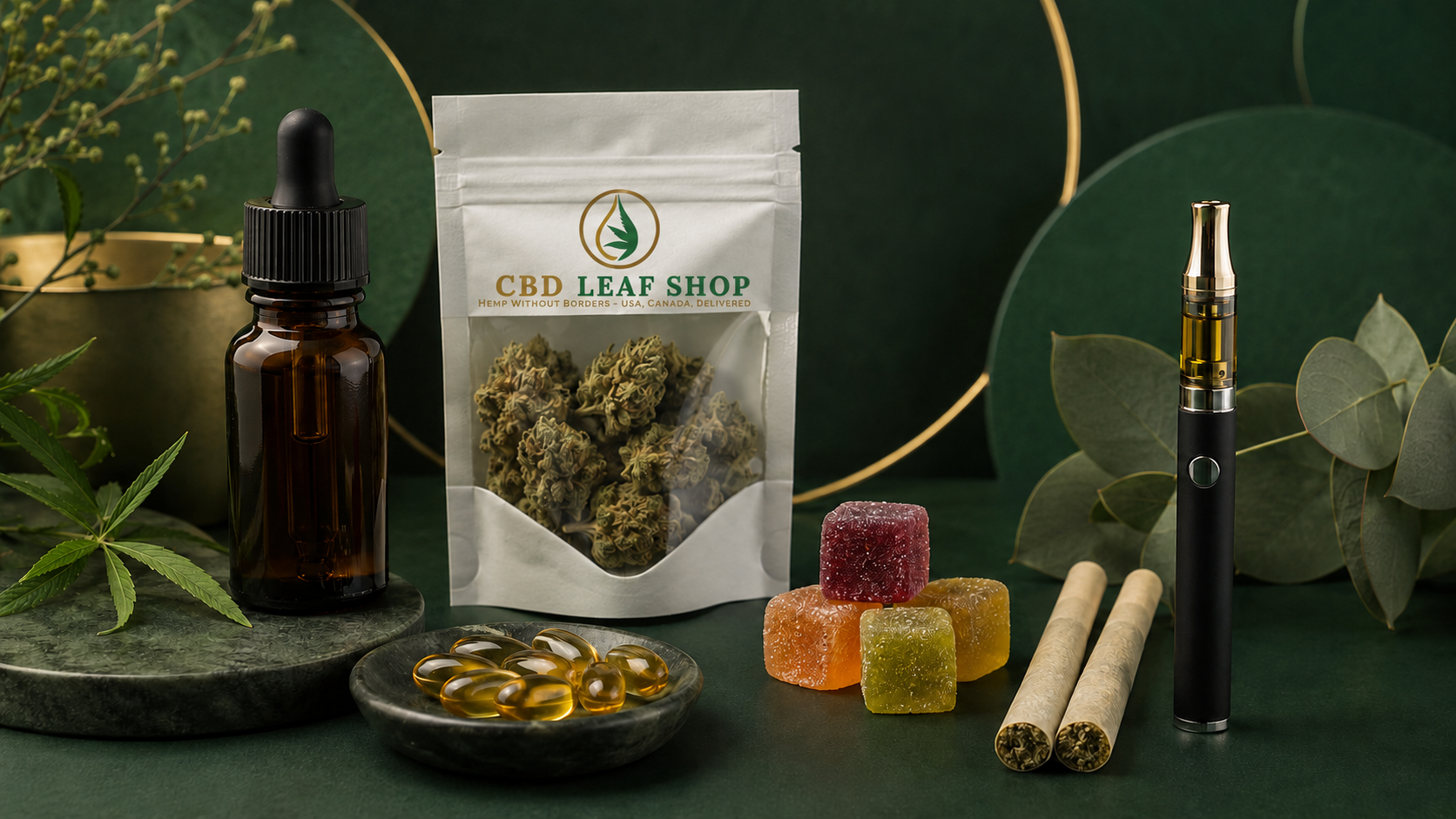
If you are new to CBD, the number of product types and label terms can feel overwhelming. Two bottles may both say “CBD,” yet differ in extract type, total contents, serving information and other cannabinoids. A flower product, softgel and vape cartridge may all contain hemp-derived cannabinoids, but they are not used or compared in the same way.
This beginner’s guide to CBD products focuses on practical shopping knowledge rather than medical promises. It explains what CBD is, how common formats differ, what full-spectrum and broad-spectrum mean, how to read a label and why a certificate of analysis matters. It does not recommend a personal dose or claim that CBD treats a health condition.
What Is CBD?
CBD is short for cannabidiol, one of the naturally occurring compounds found in Cannabis sativa. It is different from delta-9 tetrahydrocannabinol, commonly called THC. CBD itself is not considered intoxicating, but finished products can contain different cannabinoid profiles, and shoppers should never assume a product is THC-free unless its label and supporting laboratory report clearly say so.
In the United States, hemp is generally distinguished from marijuana by its delta-9 THC concentration. The U.S. Department of Agriculture explains the federal hemp threshold as no more than 0.3% delta-9 THC on a dry-weight basis. State and local rules can still differ, particularly for finished products, age restrictions, shipping and certain cannabinoids. Check the requirements that apply where you live before ordering.
It is also important to separate retail CBD products from approved medicines. The U.S. Food and Drug Administration’s CBD consumer guidance warns that CBD can present risks, including interactions with medications, and that many questions remain about regular use. Product marketing should not be treated as a substitute for professional medical advice.
Hemp, Marijuana and CBD: Understanding the Terms
“Cannabis” is a broad plant term. “Hemp” is a legal classification connected to THC concentration, while “marijuana” is used for cannabis that falls outside the federal hemp definition. CBD can be obtained from hemp, but the word hemp does not automatically tell you the finished product’s complete cannabinoid profile, quality or legal status in every location.
A reliable product page should identify the product format, amount, ingredients and cannabinoid information without using confusing medical language. When THC avoidance matters because of personal preference, workplace testing, sensitivity or local rules, review the label and batch documentation carefully. No retail CBD product should be assumed incapable of affecting a drug test.
The Main Types of CBD Products
The best format is usually the one whose label, ingredients, method of use and storage requirements you understand. The following overview explains what distinguishes the most common categories.
CBD oil
CBD oil generally combines a hemp extract with a carrier oil. Labels may state the total CBD in the bottle, the bottle size and a suggested serving. Compare all three rather than focusing only on a large number printed on the front. The carrier oil, flavoring and extract type can also vary. Visit the CBD oil category to see how individual listings present these details.
CBD hemp flower
CBD hemp flower is the harvested flower of a hemp plant. Listings may identify the strain name, flower size, indoor or other cultivation description, cannabinoid profile and package weight. Appearance and strain names do not replace testing, so review the available batch information. Browse the CBD hemp flower selection to compare current formats and sizes.
CBD pre-rolls
Pre-rolls are prepared rolls containing ground hemp flower. They remove the need to prepare loose flower, but shoppers should still check the stated contents, weight, cannabinoid information and package quantity. A pre-roll’s name does not guarantee its complete composition. Current options are listed in the CBD pre-roll category.
CBD edibles
Edibles include gummies and other products intended to be eaten. Their labels should be read particularly carefully because the amount per piece and the total amount in the package are different figures. Check serving information, ingredients, allergens, storage instructions and the number of pieces. Keep all edibles securely away from children and pets. You can compare listings in the CBD edibles category.
CBD softgels
Softgels contain a measured amount in a capsule format. They can be easier to compare than droppers because each unit should have a stated content, but you still need to check the amount per softgel, package count, total contents, additional ingredients and extract type. Browse the CBD softgels category for available product information.
CBD vape products
Vape products may be sold as self-contained disposable devices or as cartridges that require a compatible battery. Check ingredients, hardware, charging instructions, cartridge connection, total contents and laboratory information. Do not add unidentified substances or modify a device. Our guide to CBD vape cartridges versus disposables provides a more detailed hardware comparison, and the vape products category shows the current selection.
CBD Product Formats at a Glance
| Format | Main label details to compare | Practical consideration |
|---|---|---|
| CBD oil | Total CBD, bottle size, serving information, carrier oil | Requires careful reading of total versus per-serving figures |
| Hemp flower | Package weight, strain, cannabinoid profile, batch results | Quality cannot be judged by strain name alone |
| Pre-rolls | Quantity, weight, contents, cannabinoid information | Prepared format with storage and local-use considerations |
| Edibles | Amount per piece, servings, ingredients, allergens | Must be stored securely away from children and pets |
| Softgels | Amount per softgel, capsule count, extract type | Pre-measured units make label comparison straightforward |
| Vape products | Ingredients, contents, device type, compatibility, charging | Hardware and formulation must both be evaluated |
Full-Spectrum, Broad-Spectrum and CBD Isolate
These terms describe different extract profiles, but they should be confirmed through the product label and laboratory documentation rather than treated as guarantees.
Full-spectrum CBD
A full-spectrum extract is generally presented as retaining CBD along with other naturally occurring hemp compounds, which may include measurable THC within the applicable product limits. The exact cannabinoid amounts depend on the product and batch. Anyone seeking to avoid THC should not rely on the phrase “hemp-derived” alone.
Broad-spectrum CBD
Broad-spectrum products are generally formulated to contain CBD and other hemp compounds while removing THC to a stated level. Definitions and manufacturing outcomes can vary. Confirm what “THC-free” or “non-detectable” means on the relevant laboratory report and understand that testing methods have detection limits.
CBD isolate
CBD isolate is a highly refined form intended to contain CBD without the wider cannabinoid profile associated with full-spectrum extracts. The finished product may still include carrier oils, flavoring or other ingredients. Read the complete ingredient list and do not assume that the word isolate describes everything in the package.
How to Read CBD Strength and Serving Information
One of the most common beginner mistakes is confusing the total amount in a package with the amount in a single serving. For example, a bottle may display a total CBD figure on the front while the back label lists a smaller amount per measured serving. Gummies and softgels may show both the amount per piece and the total across the package.
- Find the total contents: Identify the total CBD or cannabinoid amount stated for the whole package.
- Find the serving size: Determine what the manufacturer defines as one serving, such as one softgel or a measured volume of oil.
- Check the number of servings: Compare package count and servings per container.
- Read the units: Milligrams and milliliters measure different things and should not be used interchangeably.
- Review every cannabinoid: A prominent CBD number may not tell you whether THC or other cannabinoids are present.
This guide does not provide a personal dose. Follow the product instructions, do not exceed label directions and speak with a qualified healthcare professional before use—especially if you take medication or have questions about personal risk.
How to Check CBD Product Quality
1. Look for a clear product label
The label should identify what the product is, its net contents, ingredients, cannabinoid information, manufacturer or distributor details, warnings and a batch or lot reference when applicable. Avoid products whose identity or contents are difficult to determine.
2. Match the product to its certificate of analysis
A certificate of analysis, often shortened to COA, is a laboratory report connected to a product or batch. Compare the product name and batch or lot number with the item you are considering. Review the testing date, cannabinoid panel and any available contaminant screening. A report for a different product or old batch does not confirm the item in front of you. Use the Lab Tests & COA page to locate documentation provided for listed products.
3. Review the complete ingredient list
Do not focus only on CBD. Oils may include carrier oils and flavoring; edibles may contain sweeteners, colors and allergens; vape products may use additional formulation ingredients. Choose only when you understand the full list.
4. Check storage and warning information
Heat, light and improper storage can affect products. Follow the manufacturer’s directions and keep every CBD product secured away from children and pets. Do not use a product if its seal, container or device appears damaged.
5. Be cautious with medical claims
Claims that a retail CBD product can diagnose, treat, cure or prevent a disease are a warning sign. The FDA states that, apart from one approved prescription CBD drug, other marketed CBD products have not been approved as medicines. Product education should help you compare labels and formats—not promise a medical result.
How to Choose a CBD Product Format
Start with practical questions instead of choosing by packaging or popularity:
- What format can you understand and use correctly? A clear label and straightforward instructions matter more than novelty.
- What ingredients do you want to avoid? Check allergens, flavoring, carrier oils, sweeteners and other components.
- Does THC avoidance matter? Review both the extract description and the batch laboratory report.
- Are local rules relevant? Product legality, age requirements and shipping rules can vary by location.
- Can you store it securely? Edibles and other appealing formats require especially careful storage.
- Is the supporting information complete? Prefer listings that provide enough detail to make a considered decision.
Once you know the format you want, compare several product pages side by side. Look at package size, per-unit information, ingredients, extract type and testing rather than comparing price alone. The main CBD Leaf Shop catalog brings the available categories together.
Safety and Responsible Shopping
CBD is not risk-free. The FDA has identified concerns including medication interactions and possible effects on the liver, and it advises against CBD use during pregnancy or breastfeeding. Children and pets can be harmed by accidental exposure, especially when a product resembles ordinary food or candy.
Speak with a healthcare professional before using CBD if you take prescription or over-the-counter medication, have a medical condition, are preparing for surgery, are pregnant or breastfeeding, or have any safety concern. Do not drive or operate machinery if a product affects alertness. Never use retail product information to replace diagnosis or treatment.
Buy only where legal, follow the label and keep the original package so important details remain available. If a product causes an unexpected effect, stop using it and seek appropriate medical guidance.
Frequently Asked Questions
Does CBD make you feel high?
CBD itself is not considered intoxicating, but finished products can contain THC or other cannabinoids. Read the label and batch COA rather than assuming every CBD product is THC-free.
What is the easiest CBD format for a beginner?
There is no universal best format. Softgels and gummies provide pre-measured units, while oils allow measured servings and flower or vape products have different handling requirements. Choose a legal product whose instructions, ingredients and laboratory information you understand.
What is the difference between total CBD and CBD per serving?
Total CBD refers to the amount stated for the entire package. CBD per serving refers to the amount in the manufacturer’s defined serving. Check both figures along with the number of servings.
Does hemp-derived mean THC-free?
No. Hemp-derived describes the source, not necessarily the finished cannabinoid profile. Full-spectrum hemp products may contain measurable THC within applicable limits. Review the label and laboratory report.
Why is a COA important?
A COA can provide laboratory results for cannabinoids and available contaminant screening. Its product name and batch number should match the product being evaluated.
Can CBD interact with medication?
Yes, interactions are possible. Discuss CBD with a qualified healthcare professional before use if you take any medication.
Final Thoughts
A good first CBD purchase begins with understanding—not promises. Identify the product format, read the complete label, distinguish total contents from serving information, review the extract type and match the item to its laboratory report. Compare ingredients, storage requirements and local rules before considering price or packaging.
CBD oil, hemp flower, pre-rolls, edibles, softgels and vape products each have different features. The right starting point is the format you can evaluate and handle responsibly, supported by clear product information.
Ready to Compare CBD Product Formats?
Browse the current categories or contact CBD Leaf Shop if you need help finding product information.
Browse CBD Products Contact CBD Leaf ShopThis guide is for general product education only and is not medical advice. CBD products are not risk-free. Follow product instructions, applicable laws and guidance from a qualified healthcare professional.