

Full-spectrum and broad-spectrum CBD oils can look almost identical, but their cannabinoid profiles and THC considerations may differ. This guide explains the labels, laboratory results and practical details to compare before choosing.
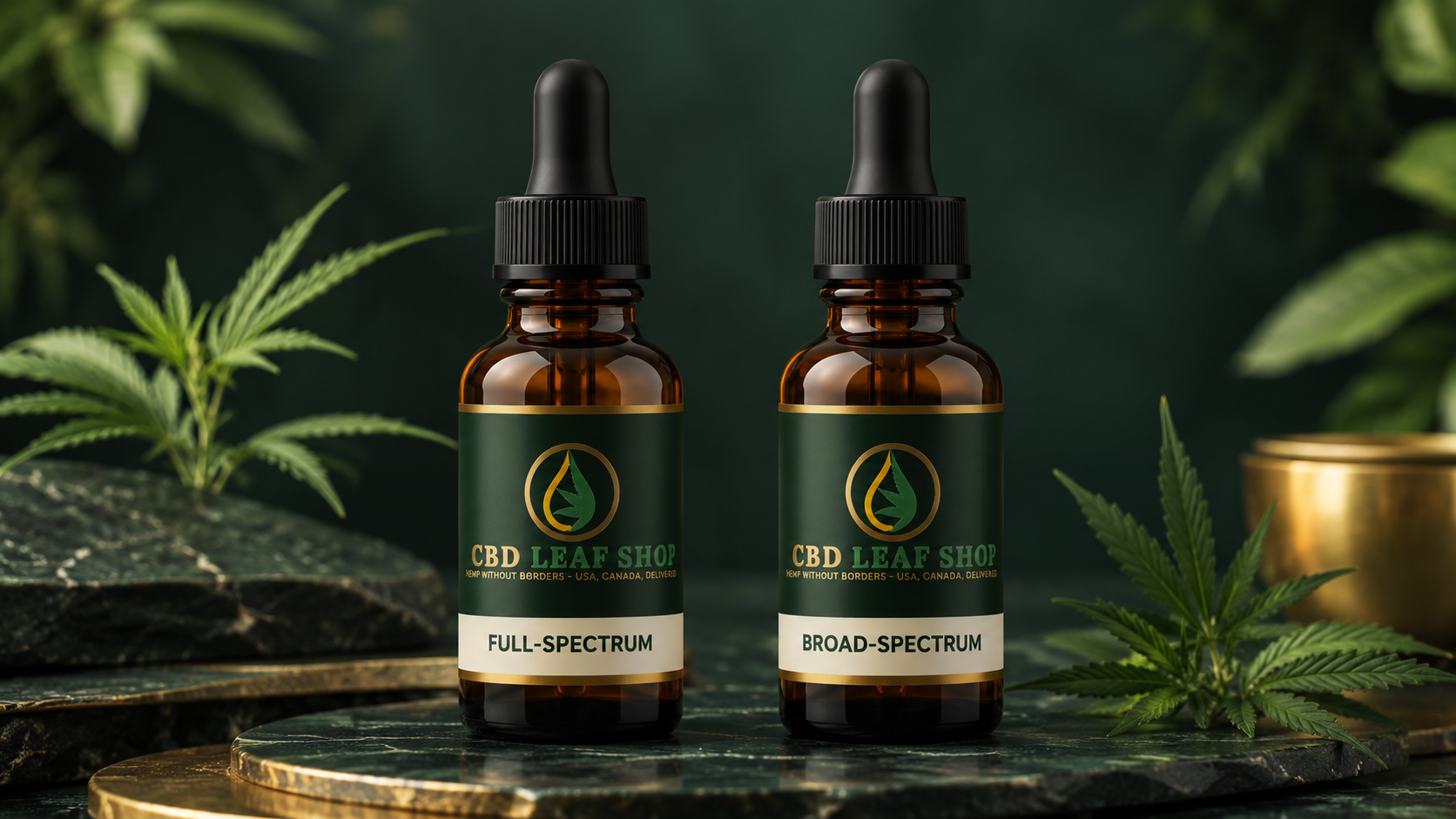
If you have compared CBD oils online, you have probably seen the terms full-spectrum, broad-spectrum and CBD isolate. These phrases describe the intended cannabinoid profile of an extract, but they do not tell you everything about the finished bottle. The amount of CBD, detectable THC, carrier oil, added ingredients, bottle size and batch laboratory results can all matter just as much.
This guide explains full-spectrum vs. broad-spectrum CBD oil without promising medical outcomes or recommending a personal dose. The goal is to help you read product information more carefully and decide which profile better matches your preferences. If you are new to the subject, start with our complete beginner’s guide to CBD products, then return here for a closer oil comparison.
Full-Spectrum vs. Broad-Spectrum CBD Oil at a Glance
| Feature | Full-spectrum CBD oil | Broad-spectrum CBD oil |
|---|---|---|
| Typical profile | CBD plus a wider range of hemp compounds | CBD plus selected additional hemp compounds |
| THC consideration | May contain measurable THC within the product’s stated limits | Usually processed to remove or reduce THC to a stated level |
| How to confirm | Review the cannabinoid panel on the matching batch COA | Review the cannabinoid panel and the laboratory’s detection limits |
| Best comparison method | Compare the exact bottle, batch number, ingredients, strength and laboratory report—not the spectrum name alone | |
What Does Full-Spectrum CBD Oil Mean?
Full-spectrum CBD oil is generally presented as containing CBD alongside a broader mixture of compounds found in hemp. Depending on the source material and processing, the finished extract may contain other cannabinoids and aromatic compounds. It may also contain measurable THC, even when the product is made from federally defined hemp.
The U.S. Department of Agriculture describes hemp as Cannabis sativa L. and its derivatives containing no more than 0.3% delta-9 THC on a dry-weight basis. That agricultural definition does not mean that every finished hemp product is completely free of THC, nor does it replace state or local rules for finished products. You can read the USDA hemp FAQ for the federal production definition.
Because full-spectrum products may contain THC, anyone who wants to minimize THC exposure should examine the laboratory report carefully. This is especially important when THC avoidance matters because of personal preference, sensitivity, workplace testing or local requirements. No CBD oil should be described as incapable of affecting a drug test.
To see how one listing presents this type of formula, review the Full-Spectrum CBD Oil USA product page. Always confirm current product details and available strengths on the live listing.
What Does Broad-Spectrum CBD Oil Mean?
Broad-spectrum CBD oil is generally formulated to retain CBD and selected additional hemp compounds while reducing or removing THC to a stated level. The exact profile can differ among manufacturers and batches. One product may show several cannabinoids on its laboratory panel, while another may show mostly CBD.
Broad-spectrum does not automatically mean that a laboratory can prove absolute zero THC. Reports may use terms such as “ND,” meaning not detected, or show a result below the laboratory’s limit of quantitation. That result should be read together with the report’s testing method and detection limits.
People often consider broad-spectrum products when they prefer a multi-compound hemp profile but want to reduce THC exposure. However, a spectrum label cannot guarantee the result of a workplace drug test or confirm legality in every location. The matching batch COA remains the strongest product-specific evidence available to a shopper.
You can compare the format and strength options on the Leaf Balance Broad-Spectrum CBD Oil product page, or browse the complete CBD oil category.
Where Does CBD Isolate Fit?
CBD isolate is a highly refined ingredient intended to contain CBD without the broader cannabinoid mixture associated with full-spectrum or broad-spectrum extracts. A finished isolate oil can still include a carrier oil, flavoring or other ingredients, so “isolate” describes the cannabinoid ingredient rather than every component in the bottle.
Isolate can be useful as a comparison point: full-spectrum aims for a wider hemp profile, broad-spectrum aims to retain selected compounds while reducing THC, and isolate aims to provide CBD in a more purified form. These are profile descriptions—not rankings of quality and not promises that one option will work better for a particular person.
How to Read the Label and Certificate of Analysis
A certificate of analysis, commonly called a COA, is a laboratory report associated with a product or production batch. It can help you compare the label with the tested cannabinoid profile. Use the following process instead of relying only on the front of the bottle:
- Match the identity: Confirm that the product name and extract type on the report correspond to the oil you are reviewing.
- Match the batch or lot: The number on the bottle should match the number shown on the report whenever batch information is provided.
- Check the test date: A report for an old or unrelated batch does not confirm the current bottle.
- Read the cannabinoid panel: Look for CBD, delta-9 THC and any other reported cannabinoids rather than reading only the largest number.
- Understand ND and reporting limits: “Not detected” means the laboratory did not detect the compound above its stated method threshold; it is not always the same as mathematical zero.
- Review available contaminant panels: When supplied, check results for pesticides, heavy metals, residual solvents and microorganisms.
Visit the CBD Leaf Shop Lab Tests & COA page to locate available documentation. If you cannot connect a report to the product or batch you are considering, ask for clarification before purchasing.
Strength Matters Separately From Spectrum
Full-spectrum and broad-spectrum describe the type of cannabinoid profile; they do not tell you the bottle’s CBD concentration. Two oils can share the same spectrum label while containing very different amounts of CBD.
When comparing strengths, identify the total milligrams of CBD in the entire bottle and the bottle volume in milliliters. A simple concentration comparison uses:
For example, a 30 mL bottle containing 900 mg of CBD has a listed concentration of 30 mg per mL. This calculation helps compare labels; it is not a personal dosing recommendation. Follow the product’s directions and speak with a qualified healthcare professional about individual use or safety questions.
Other Details to Compare Before Buying
Carrier oil
CBD extracts are commonly combined with a carrier oil. Read the ingredient list to identify the carrier and consider allergies, dietary restrictions and storage instructions.
Added ingredients
Flavorings, botanical ingredients and other compounds may change the formula. A spectrum label does not describe these additions, so review the complete ingredient list rather than focusing only on CBD.
Bottle size and serving information
Do not confuse the total amount in the bottle with the amount in a manufacturer-defined serving. Compare the bottle volume, total CBD, serving size and number of servings as separate figures.
Packaging and storage
Check that the bottle is sealed, clearly labeled and stored as directed. Keep CBD oils in their original packaging and secured away from children and pets.
Marketing claims
Avoid treating promises to diagnose, cure, treat or prevent a disease as evidence of quality. The FDA’s CBD consumer guidance notes that nonprescription CBD products can present risks, may interact with medications and have not been approved as treatments simply because they are available for sale.
How to Choose Between Full-Spectrum and Broad-Spectrum
There is no universal winner. A responsible choice depends on which product information you can verify and which profile aligns with your preferences. Use this checklist:
- Consider THC preference: If minimizing THC is important, broad-spectrum may align more closely, but the batch COA must support the label.
- Consider the desired profile: If you prefer a wider hemp-derived cannabinoid profile and accept possible measurable THC, examine full-spectrum options.
- Compare concentration: Calculate or locate the CBD amount per milliliter instead of comparing front-label totals alone.
- Review every ingredient: Check carrier oils, flavorings and other additions.
- Verify testing: Match the bottle to a current laboratory report and inspect the cannabinoid panel.
- Check local requirements: Laws, age restrictions and shipping rules can differ by jurisdiction.
- Ask about personal safety: Speak with a qualified healthcare professional if you take medication, have a medical condition, are pregnant or breastfeeding, or have another safety concern.
After deciding which profile you want to compare, view the CBD Leaf Shop oil selection and read the individual listings carefully. Price should be considered together with bottle size, concentration, ingredients and available laboratory documentation.
Safety and Responsible Use
CBD is not risk-free. The FDA identifies concerns including medication interactions, changes in alertness and potential liver injury, while many questions about regular consumer use remain unanswered. Do not use a retail CBD oil as a substitute for diagnosis, treatment or prescribed medication.
Consult a qualified healthcare professional before using CBD if you take prescription or over-the-counter medicine, have a medical condition, are preparing for surgery, are pregnant or breastfeeding, or have any concern about personal risk. Do not drive or operate machinery if a product affects your alertness.
Keep oils securely away from children and pets, retain the original label, follow the manufacturer’s directions and comply with the laws that apply where you live.
Frequently Asked Questions
Does full-spectrum CBD oil contain THC?
It may contain measurable THC within the product’s stated limits. Check the exact cannabinoid results on the matching batch COA rather than relying on the word “hemp.”
Is broad-spectrum CBD oil always completely THC-free?
Broad-spectrum oil is generally processed to reduce or remove THC to a stated level, but definitions and laboratory detection limits vary. Confirm the result on the product’s COA.
Will broad-spectrum CBD guarantee a negative drug test?
No CBD product should guarantee a negative drug test. Product composition, testing limits, use patterns and test sensitivity can vary.
Is full-spectrum stronger than broad-spectrum?
Not necessarily. Spectrum describes the cannabinoid profile, while strength usually refers to the amount or concentration of CBD. Compare both separately.
What does “ND” mean on a CBD laboratory report?
ND commonly means “not detected” above the laboratory method’s stated reporting threshold. Review the report’s limits and notes for context.
Can I choose CBD oil based only on the front label?
No. Review the full ingredient list, total CBD, bottle size, serving information, warnings, batch number and corresponding laboratory report.
Final Thoughts
The most useful distinction between full-spectrum and broad-spectrum CBD oil is the intended cannabinoid profile and the way THC is handled. Full-spectrum products may retain a wider profile that includes measurable THC, while broad-spectrum products are generally processed to reduce or remove THC to a stated level. Neither term tells you the exact contents of every bottle.
Choose by evidence rather than packaging: match the batch COA, compare concentration, read every ingredient, understand the laboratory’s reporting limits and consider local rules. If you still need help finding product information, use the contact option below before ordering.
Compare CBD Oil Options
Browse full-spectrum, broad-spectrum and isolate oil listings, then review the product details and available laboratory information.
Browse CBD Oils Contact CBD Leaf Shop