

CBD and Sleep: What to Know Before Choosing a Product
CBD is often discussed in connection with evening routines, but marketing can sound more certain than the research. This practical guide explains what the evidence does and does not show, how to compare formats and labels, and which safety questions deserve attention before you buy.
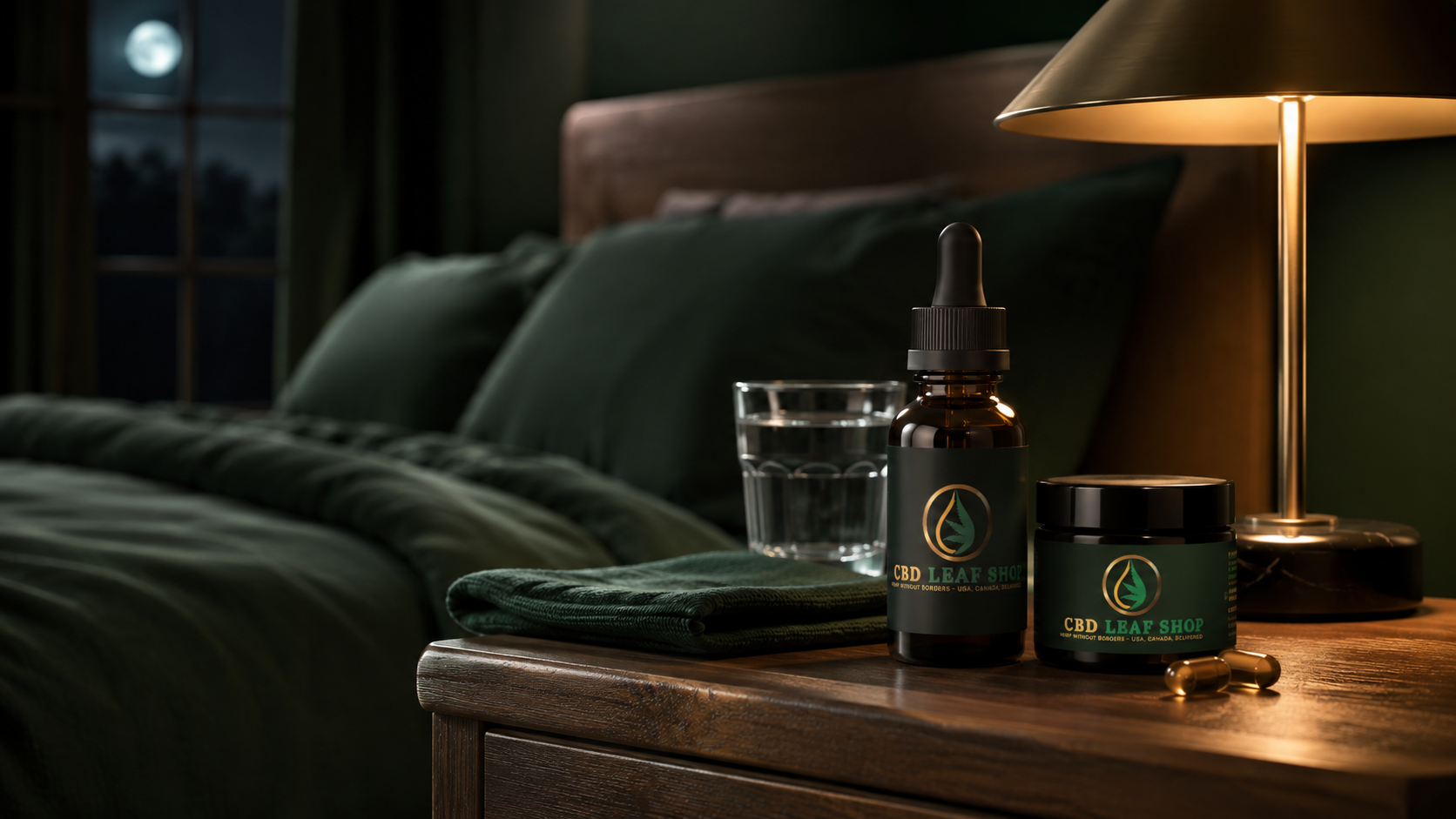
Choose products by their label, serving information and current laboratory report—not by sleep promises alone.
The quick answer: CBD is not a guaranteed sleep solution
Some people say CBD fits comfortably into their nighttime routine, and several clinical studies have reported improvements in certain sleep measures. Other controlled studies have found little difference from placebo on important outcomes. Products, doses, study populations and the presence of other cannabinoids also vary widely, making simple conclusions difficult.
The useful question is therefore not “Which CBD product will cure insomnia?” No over-the-counter CBD product should be treated as a proven cure. A better question is: “If I am considering CBD, how can I compare products responsibly and avoid exaggerated claims?”
Important: Persistent insomnia, loud snoring with breathing pauses, severe daytime sleepiness or a sudden change in sleep deserves professional assessment. CBD should not delay diagnosis or established care.
What does the research say about CBD and sleep?
The evidence is developing, not settled. One randomized trial of several low-dose cannabinoid formulations reported improved sleep disturbance within groups, but found no meaningful advantage over CBD isolate or melatonin in several comparisons. Another randomized pilot trial using 150 mg of CBD nightly found results similar to placebo for most sleep outcomes. A more recent controlled study of a CBD-and-terpene formulation observed a small improvement in combined slow-wave and REM sleep, without increasing total sleep time.
These findings are interesting, but they do not prove that every retail CBD oil, softgel or edible will improve sleep. Study products may contain different concentrations and ingredients from products available online. Small sample sizes, short study periods and different ways of measuring sleep also limit broad conclusions.
Promising signals
Some controlled studies report improvements in selected sleep-quality or sleep-stage measures for certain participants.
Mixed outcomes
Other trials find CBD similar to placebo on most outcomes, so benefits should not be assumed.
Product differences
CBD dose, cannabinoid profile, delivery format and additional ingredients differ substantially across studies and retail products.
The U.S. Food and Drug Administration also states that, apart from one prescription CBD medicine for specific seizure disorders, consumer CBD products have not been approved to diagnose, treat, cure or prevent diseases. That is why responsible product pages should describe composition and quality without promising medical results.
Choosing a CBD format for an evening routine
Format affects convenience, measurement and how consistently you can follow a routine. It does not determine whether a product will “work” for sleep. Compare the format with your preferences and review the label before deciding.
| Format | Why shoppers consider it | What to verify |
|---|---|---|
| CBD oil or tincture | Flexible serving sizes and straightforward adjustment using a marked dropper. | CBD per serving, bottle total, serving volume, carrier oil and dropper markings. |
| CBD softgels | Pre-measured servings and a simple, repeatable routine without flavor. | CBD per softgel, number of softgels, capsule ingredients and cannabinoid profile. |
| CBD edibles | Pre-portioned and convenient, with familiar flavors and textures. | CBD per piece, sugar and allergens, additional active ingredients and child-safe storage. |
| CBD vape products | Some shoppers choose inhaled formats, although they are not appropriate for everyone. | Ingredient transparency, device instructions and health considerations associated with inhalation. |
For easier comparison, start with the CBD oil collection or browse CBD softgels. If you are new to these categories, our beginner’s guide to CBD products explains how oils, softgels, edibles, flower and vapes differ.
Full-spectrum, broad-spectrum or isolate?
Full-spectrum products are intended to retain a broader range of hemp compounds and may contain legally permitted trace amounts of THC. Broad-spectrum products are generally processed to remove THC while retaining several other hemp compounds. CBD isolate is a more purified form of CBD.
Those labels are useful starting points, but the laboratory report matters more than the marketing term. People who undergo drug testing or want to avoid THC should understand that “THC-free” wording does not replace batch-level verification, and no product can promise a particular drug-testing result. Our guide to full-spectrum versus broad-spectrum CBD oil provides a detailed comparison.
How to read the label before choosing
1. Separate total CBD from CBD per serving
A large number on the front of a bottle often represents the total CBD in the entire package, not one serving. For example, a bottle labeled with a total milligram amount may contain many individual servings. Look for the serving size and CBD per serving so that you can compare products consistently.
2. Review every active ingredient
Products marketed for nighttime use may include melatonin, herbs or other compounds in addition to CBD. More ingredients do not automatically mean a better product. Each ingredient can introduce its own precautions, side effects or medication interactions. Avoid stacking several products with overlapping ingredients unless a qualified professional has reviewed them.
3. Check the certificate of analysis
A certificate of analysis, commonly called a COA, is a laboratory report for a product or batch. It should help you compare the measured cannabinoid content with the label and may include contaminant screening. Visit the CBD Leaf Shop Lab Tests and COAs page for available reports.
- Match the product or batch. Confirm that the report corresponds to the product and, where available, the batch or lot number.
- Check the report date. A current report is more useful than an old document that may relate to previous inventory.
- Compare cannabinoid results. Review measured CBD and THC values instead of relying only on front-label terminology.
- Look for contaminant panels. Depending on the report, these may cover pesticides, heavy metals, residual solvents or microbes.
- Ask if anything is unclear. A legitimate question about a label or report should receive a straightforward answer.
Build a sleep routine before judging a product
Sleep is influenced by schedule, light exposure, caffeine, alcohol, stress, room temperature, activity and health conditions. Changing several variables at once makes it difficult to know what affected the result. If a healthcare professional agrees that a CBD product is reasonable for you, keep the wider routine simple and consistent.
- Follow the product label and do not assume that more is better.
- Avoid introducing multiple new nighttime products simultaneously.
- Keep a consistent bedtime and wake time where practical.
- Reduce bright screens and stimulating activities near bedtime.
- Track bedtime, awakenings, wake time and next-day alertness.
- Stop and seek advice if you experience concerning or persistent effects.
Next-day function matters as much as falling asleep. A product that leaves you unusually groggy, dizzy or unable to concentrate is not a good fit simply because it was used at night.
Safety questions that should come before checkout
The FDA warns that CBD can cause side effects and may interact with medicines. Reported concerns include liver injury, changes in alertness and interactions that may increase or decrease the effects of other drugs. Combining CBD with alcohol or other substances that slow the central nervous system may increase sedation and drowsiness.
Speak with a doctor or pharmacist first if you take prescription or over-the-counter medicine, have a liver condition, are preparing for surgery, or are receiving treatment for a sleep, neurological or mental-health condition. The FDA strongly advises against CBD use during pregnancy or breastfeeding.
Do not drive, operate machinery or perform safety-sensitive work if a product makes you sleepy or impairs your attention. Keep all CBD products away from children and pets, particularly flavored edibles that could be mistaken for ordinary sweets.
A practical CBD-and-sleep shopping checklist
- Define the goal honestly: you are comparing a wellness product, not buying a guaranteed insomnia treatment.
- Choose a manageable format: oil for adjustable measurement, or a pre-measured format for convenience.
- Read CBD per serving: do not compare products using bottle totals alone.
- Review the cannabinoid profile: understand full-spectrum, broad-spectrum and isolate terminology.
- Check every added ingredient: especially melatonin, herbs, sweeteners and allergens.
- Find the relevant COA: match the product or batch and review CBD, THC and contaminant information.
- Consider medications and health conditions: ask a healthcare professional when interactions are possible.
- Reject medical promises: avoid products marketed as cures or replacements for professional care.
Frequently asked questions
Does CBD make everyone sleepy?
No. Responses differ, and sleepiness is not guaranteed. Some people report drowsiness, while others do not. Product composition, amount, other substances and individual factors can all affect the experience.
Is CBD approved for insomnia?
No consumer CBD product is FDA-approved to treat insomnia. The only FDA-approved CBD medicine is a prescription product for certain seizure disorders. Persistent sleep problems should be assessed by a healthcare professional.
Is full-spectrum or broad-spectrum CBD better for sleep?
There is not enough evidence to declare one spectrum universally better for sleep. The choice often depends on THC preferences, product transparency, label information and the batch COA.
Can I take CBD with sleeping medication?
Do not assume the combination is safe. CBD may interact with medications and may add to sedation. Ask the prescribing clinician or a pharmacist before combining them.
How can I tell whether a CBD product is trustworthy?
Look for clear serving information, a complete ingredient list, accessible batch testing, realistic language and a support channel that answers product questions without making medical promises.
- U.S. FDA: What You Need to Know About Products Containing CBD
- U.S. FDA: CBD During Pregnancy or Breastfeeding
- Randomized pilot trial of nightly CBD for insomnia
- Randomized trial comparing non-psychoactive cannabinoid formulations for sleep
- Randomized study of a CBD-terpene formulation and sleep physiology
This guide is educational and is not medical advice. Research and regulations can change, so consult appropriate professionals for decisions involving health, medications or local law.
Compare CBD products with better questions
Review the format, serving information, ingredients and laboratory report before deciding. Our team can help you locate available product details without making medical recommendations.